Mostrando postagens com marcador lawyer. Mostrar todas as postagens

terça-feira, 5 de junho de 2018

Opening of branch in Brazil - Official guide

The Brazilian government has published a manual  explaining how a foreign corporation can set up a branch in Brazil. 

Unfortunately, it is terrible. 

The problem is that the investment via branches was designed for a different era. The two basic acts that regulate it are respectively from 1916 and 1962. 

It was the time of huge factories shipped in blocks to poor countries, but totally controlled and administered from headquarters back in the UK or Germany. 

Nowadays, any big business will have a local board in Brazil which is trained in Brazilian taxation and that understands the Brazilian market. 

Moreover, under the old rules the branches were forced to publish the balance sheets of the worldwid eoperations in Brazilian newspapwers. Nobody is going to spend money on this kind of bureacracy nowadays. 

I`m saying this because I think the guide should have focused on the few exceptional cases in which using a branch is still fine. For example, if you are a trading company operating between Brazil and Uruguai. 

Without this context, the guide is actually boring and intimidating. 

The documetn missed the opportunity to display how incorporating a new company in Brazil has become a much quickers and smarter investment route than opening a branch. 

On the plus side, the guide brings some templates that can be very useful. The image on this post is an example. 

There is a Spanish version too. 

If you want to read the guides, you may download the English one here and the Spanish one here

For a more positive view on how to incorporate in Brazil you may check any of the links below: 


terça-feira, 7 de novembro de 2017

Exporting/Importing from Brazil Made Easier: Changes to the Foreign Trade Portal

This is an article I wrote to Bloomber, in partnership with Harris Group, a Chilean-Australian law firm. I`m not sure if or when the article has been published by Bloomberg, but I`m posting the original text. 

This article describes legal changes that helped Brazil to climb a few positions in the Doing Business ranking from 2018 (as mentioned here).


Brazil is a very large country, with clear regional differences. It is also organized as a federation, which means that part of the state authority resides in the member states. And, finally, it has a well-developed legal system, covering most of the areas associated with modern democracies, such as environmental controls, export quotas, etc. This legal system, however, is not backed up by an efficient administrative body, but rather by a very fragmented and often untrained team of public servants. As a result, entrepreneurs must face a myriad of local and federal regulations, managed by a circuit of suspicious bureaucrats.

This is even more apparent during the export process. There is frequent confusion regarding the production of documents. Different federal bodies have conflicting and overlapping competencies. Some procedures are performed on paper, while others are processed electronically, causing the exporter to type in the same information two or three different times. Moreover, the individual systems used by federal bodies do not communicate with the overall system, called “Siscomex”. Due to this gap in communication, the exporter must keep a physical file containing extracts of all the documents and licenses. This dossier was kept in place in order to instruct the inspectors, in case a physical inspection is needed.

In order to solve this, the Brazilian government has been studying a way to centralize the import-export procedure, making it more efficient. To this effect, several rounds of public consultation have been carried out. The government has also been continuously making changes to the Siscomex, in an attempt to streamline the process: improvements were  slowly taking place.

However, since the traumatic impeachment process of 2015–2016, the Brazilian economy has needed a burst of incentive to start running again. From the onset, President Temer’s administration has been in a hurry to deliver reforms that would have an immediate impact on results in GDP. It just so happened that the consolidation of export procedures was the kind of cheap reform that could be implemented quickly. It involved no major spending and the framework was already in place.

Indeed, the unified export system has started with exports by air and, as of June 2017, it became the main route for Brazilian exports in other modalities (road, rail, maritime, etc. ).

The main rules that put the system in place were the Federal Revenue Service/Export Secretary directive n. 349, from march 21, 2017 and the CONAMA directive n. 14, from march 22, 2017.

A description of the system’s main features and how it benefits business is provided below.

Unified Declaration
Exports are now managed through an easily accessible online platform (ww.siscomex.gov.br). The system has been designed as a "single window" platform, where several agencies can interact with the exporter. The interaction includes the publishing of rules and clarifications and also the exchange of documents and forms.

Moreover, the export procedures have been streamlined. They now depend on a single document, the Unified Declaration of Export (Declaração Unificada de Exportação, “DUE”).

However, in reality, saying that the export process depends on a single document is not absolutely correct. The DUE is drafted based on the tax invoice (another electronic document, issued by any company in Brazil that is selling merchandise, even within the country). Also, there may be additional registrations regarding the identification of packages and cargo (as we will see below). The great innovation is that the DUE, processed via the new Siscomex page, replaces two or three other independent registrations that were required, one at each step of the export process. Every time, the data had to be typed in the system again and the process was prone to mistakes. Now, the DUE moves along the path, maintaining all the relevant information.

Attachment of DocumentsSpecial Approvals in one Place
One of the best improvement brought about by the DUE is the path for exportation of regulated products.

As any other country, Brazil restricts or controls exports of several items. Some are subject to quotas. Strategic products like oil and military equipment are subject to limitations. Some are subject to specific regulations, such as diamonds (which must receive the Kimberley certificate) or merchandise that is dependent on sanitary controls. Before the DUE, each license or certificate would have to be obtained independently and would later have to be somehow added to the export documentation, or presented during an inspection.

Now, these documents can be added to the system. Actually, the export procedure can be initiated without them and the exporter may obtain the licenses over time, as long as they are ready before shipping.

This brings about another feature of the Siscomex single window platform. Additional documents can easily be scanned, signed digitally and added to the platform, This was not possible, or was very restricted, in the past.

Cargo Control
The unified export system has also adopted a unified reference for cargo (call “RUC”). This has been designed according to the WTO recommendations regarding a "Unique Consignment Reference."

The RUC allows for the aggregation of several invoices into a single cargo and will be used to track shipments through all stages of the export process.
Management of information related to packages and cargo used to be somewhat chaotic. This is certainly a welcome improvement.

Detailed Specification
The system allows for the insertion of additional details about the products being exported. This feature aims at fixing a common problem, which was the request for more detailed specifications by the Customs importers. Since the information about the products was dispersed in several documents, and since the Harmonized System Code (adopted in Brazil with some modifications and called the “NCM code”) allows for generic classification (such as "other"), it was common to see a merchandise identified by its NCM, by a written description, and by some other code used internally by the Brazilian customs or tax authorities.

The system has been designed to coordinate and centralize all description in a single place. The identification will be complemented by a Global Product Code (created by GS1).

Test Mode and Consultation
A relevant feature is that the system has a testing mode, which allows the exporter to simulate the operation beforehand and to check whether additional licenses are required.

Conclusion
In summary, the system certainly brings a lot of improvements. It is being continuously improved and tends to make Brazilian exports much more agile.

The end goal is to reduce export times from 13 to 8 days and import times from 17 to 10 days. The Portal also aims to increase transparency by allowing companies to monitor the progress of their operations in detail over the internet.

According to the Doing Business study conducted by the World Bank, an export of a containerized good in Brazil takes on average 13 days to complete. An import of the same type of product requires 17 days. Additionally, it costs $ 2,215 on average to export a container from Brazil (excluding taxes), while for imports the same costs add up to about $ 2,275. This number puts Brazil in 124th place in the Doing Business trading across borders ranking.

With the Unified Foreign Trade Portal, the goal is to have export times from Brazil reduced by 38.5 percent to a maximum of 8 days, in line with global best practices, by 2017. As for imports, the aim is for average terms to be reduced to 10 days, a 40 percent decrease from current levels, by 2017. As a result of the time reductions and consequent money savings, Brazil intends to be among the 70 best countries in the world for foreign trade. Time will tell if this becomes reality.
————-
Harris Gomez Group is a law firm with offices in Santiago, Bogotá, and Sydney. We also have legal teams in Mexico, Peru, Bolivia, Brazil, and Argentina. Over the last 16 years, we have been supporting foreign companies with their growth in Latin America. Many of our clients are technology companies, service providers and engineering companies that focus on the mining, energy and infrastructure markets.

To better understand how we can support your management team, please contact Cody Mcfarlane at cmm@hgomezgroup.com

segunda-feira, 6 de novembro de 2017

Doing business in Brazil - World Bank Report 2018 - a tiny surprise


Brazil has clibmed from the 123rd place to the 120th.


I understand that part of this improvement is due to a reform in the import/export procedures. They were heavily dependent on paper forms but have been updated to accept electronic form, via a centralized website.


This has been one of the most subtle reforms of Michel Temer`s government. But it has caused a lot of impact on day to day operations. This is impressive if you compare it to the enormous effort being put in the reform of the pension system, with almost zero results so far.


It also shows that a lot of the problems faced by Brazilian companies are not structural problems. The legal system is fairly well designed, most of the time.


 It is the small things that really delay business:  the double notarizations, the lack of standardization, the need to xerox a document three times, because the first two copies were not clear enought, etc.


Some other changes of procedure of the same nature than the export simplifcation have been adopted recently, with very good results. The adoption of the the Apostille for foreign documents, for example, has been working fine.


'via Blog this'

segunda-feira, 10 de julho de 2017

INVESTMENT VISA IN BRAZIL - 2017

As of 2017, the standard investiment visa requires the investor to incorporate a company in Brazil, or to join any existing company in Brazil, and invest at least 500,000.00 BRL (about 150,000.00 USD). 

In this case, to invest means to transfer money. The government does not require that the money be used specifically for the purchase of machinery or for any other purpose. In general,  they will evaluate the project`s potential to generate jobs and to pay for services provided by Brazilians


There is an exception for tech companies. 

Investments in technology may be as low as 60,000.00 USD, depending on the relevance of the technology. In this case, the company receiving the investment and asking for the visa must:

a)  be located in one of Brazil`s tech parks, or connected to a Brazilian official startup program; or

b) prove that the technology will be relevant for the development of the Brazilian technology ecosystem. For example, that it will improve Brazilian manufacturing capabilities or have a positive impact in the consumer market.


domingo, 9 de julho de 2017

EUROPEAN BILLS OF EXCHANGE AND THE BRAZILIAN BANKS


The use of negotiable instruments in Brazil is very different from it use in Europe.

I have a case that illustrates that in an informative and funny fashion.

One of my clients, a European company, performed sales of electronic equipment worth several million dollars to a Brazilian buyer.

We drafter a very good sales contract, according to Brazilian law. It was dully signed and executed. Things were looking good.

However, the bank financing the production of the good (my client`s bank) demanded a very specific kind of security linked to the agreement. It wished for a Bill of Exchange.

That is when the problems began.

Brazilian businessmen are used to 3 kinds of negotiable instruments: CHEQUES, PROMISSORY NOTES and, in case of import/export, LETTERS OF CREDIT.

This is pretty much it. In some specific markets, especially in agribusiness, people may use a special note called Warrant. But, apart from that, one would be hard-pressed to find a template of a Bill of Exchange. Let alone use one.

We tried to explain this to the client`s bank and suggested that it replaced the BoE for a promissory note. But the bank was inflexible.

At the end of the day, the solution was to use a Bill of Exchange in which the drawer drew on himself, payable to his own order. That is to say, we have used the Bill of Exchange as if it were, effectively, a promissory note (since there was no third-party acting as a payee).

This solved the crisis, in theory. However, the template used by my client had a blank field that should be filled in with the information of a Brazilian bank, who would, under ideal conditions, be the payee of the BoE.

The field was filled in with the name of the buyer’s bank, but without many specific details about the account. Most importantly, it didn`t contain the banks written acceptance.

This is a curious fact. Obtaining the acceptance of a Brazilian bank to a Bill of Exchange is almost impossible. It is only practicable in large transaction (such as the construction of a stadium). And, to achieve that, the bank will ask for a great deal of counter guarantees from the drawer. Lawyers will review it for weeks, etc.

This is not something that is available to a regular wholesaler or small-business owner.  “Normal” people, so to speak, will use cheques.

This specific aspect of the Brazilian bank system will play a part in the story soon.

Well, after the BoEs have been signed, the client wished us to mail it to Europe, so that it could keep it in his safe.

But then another aspect of the infamous “Brazilian Cost” (the overall name for the small but persistent setbacks that haunt people who do business here) presented itself: the postal service and the courier services working in Brazil (DHL, FedEx, etc.) refused to transport the bill, unless we hired insurance. The cost of the insurance was about 15 thousand dollars.

So, the client bought a plane ticket and came here to pick them up. And that was it.

A couple months later, when the payment of the Bills was due, the Brazilian buyer asked to redeem the hard copies, so that he could make the payment.

At this point, my client told me not to worry. After all, the Bills of Exchange had been mailed (without insurance) to the client`s bank address in Brazil.

I was truly shocked to hear that.

It seems that someone in my client`s financial department just followed the standard procedure they used with other European clients and maild the Bills to the buyer`s bank, expecting the bank to pay it.

The problem is that this procedure is not even conceivable in Brazil. Mainly because Brazilian banks do not act as payees for Bills of Exchange. But also, because nobody in Brazil uses courier or mail to transfer negotiable instruments. They are always closely watched and transferred hand to hand, accompanied by a receipt of some sort.

Well, the person who signed for the delivery of the notes was a common employee of the bank, maybe a security guard or an intern, who used only his first name (which is usual). We couldn`t identify him.

After several phone calls and visits to the bank, I finally spoke to the person who handled the Bills. They ended up being directed to the foreign exchange desk, since they were written in English and “looked like an international thing”.

The person in the forex desk told me, plainly: “I kept it for a few days, then threw it in the trash bin”.

And, just like that, the BoEs were history.

Luckily, the agreement allowed us to receive payment even without the notes.  But the lawyers of the buyer demanded us to draft a series of documents, voiding the original Bill.  The payment was delayed for months, until we could formally prove that the Bill were destroyed.


The point is: Brazil is just like the rest of the world, but different. Try to adapt your business to the Brazilian system. Things will be easier this way.

sábado, 3 de junho de 2017

The fastest way to have a Brazilian company

Incorporating a company in Brazil takes time. In average, 3 months (for details about incorporation ,please see this post).

I have tried to speed up this process, but without much success. It depends on several independent things: availability of a translator, public hollidays, courier delivery, etc. 


Indeed, this is one of the aspects of Brazilian bureacracy and lack of competitivity. Each step of the task is slightly inneficient. Combined, they slow down the rythm of business. 


When the project includes a Brazilian partner, this hindrance does not matter much, because he will be expecting it and the plans would already have counted for the delay. 


But when the project is totally controlled by foreign parties, this kind of time is essentially counted as a waste. 


I have been experimenting with a system that is less safe, legally speaking, but that can be used to conduct business at a faster pace. Here it is: 


a) I will incorporate a service company in Brazil, with two nominee partners and one nominee director. The company will have the same name desired by the investor;


b) the nominee partners and directors will enter into a quota/shares sales agreement with the future investor. This agreement will allow for a 60-day period in which the buyer (the investor) will be allowed to participate in the company`s management/


c) the investor will prepare the documents required to take possession of the quotas/shares;


d) meanwhile, the Brazilian company may enter into agreements with local partner. The company will refrain from issuing invoices, however. The invoices will be issued only after the foreign investors formally acquire the quotas. 


In short, the procedure is an acquisition of shelf-company. But with some additional agreements that ensure that the foreign investor will have control over the company even before they are formally the owners. 


This strategy is more expensive than a regular incorporation. There will be extra costs with the nominee partners, with additional agreements, etc.


The advantage is that it could allow the foreign investors to conduct business in Brazil within 03 weeks, instead of 12 weeks. 


Business will be limited, of course, and this strategy will work better with service company. Also, import/export operations will not be possible at first, because any Brazilian company that is to engage in international trade must first obtain a license (the "Radar").  


Even so, this strategy will allow investors to have a legal presence in Brazil much faster than usual. 


terça-feira, 23 de maio de 2017

Power of Attorney for setting up a company in Brazil – new rules

In order to incorporate a company in Brazil, the foreign investor must appoint a local representative who lives in Brazil.

Traditionally, this representative was required to have powers to receive court summoning and to answer to any civil subpoenas directed at the foreign investor.

This makes sense under Brazilian procedural law, that puts a lot of focus on making sure that respondents will be properly summoned to present his defence in administrative or judicial procedures. Rulings “in absentia” are exceptional.  By requesting the nomination of a Brazilian resident as representative of the investor, Brazilian authorities would always have someone close enough to be summoned by ordinary means (without the need for international communications between courts, etc.).

This is the basic idea.

Now, since Brazil is a very bureaucratic place, people soon noticed that is would be a waste of time to issue a one-line PoA, considering that several other actions also require a power of attorney. For example: registration of the investment before the Brazilian Central Bank, clearance of foreign currency exchange agreement, etc.

Not to mention that any alteration to the articles of the company, such as increase in equity or appointment of new directors, would also require the investor to sign the documents himself, or to name a proper representative in Brazil with powers to do so.

All things considered, a proper PoA would have 3 pages and a LOT of very specific powers.

Now, this “excess” of powers has contributed to a problem. Brazilian courts started to consider that this all-powerful attorney would act, in practice, as a company director. Thus, labour and tax courts started to redirect debt collection suits to the Brazilian representative, whenever the company didn`t have enough assets to pay for the debts.

This situation, albeit technically illegal, has persisted for some time.

Recently, the Brazilian Revenue Service has tried to make the representative`s personal liability official. It issued an administrative ruling stating that any foreign company looking for enrolment before the national taxpayer`s registry (the famous CNPJ) must name a local representative with full powers to manage the investor`s assets in Brazil.

By choosing these word, the Brazilian Revenue Service made clear that the local representative will be considered a kind of local manager, not only a representative able to receive summoning.

Please notice that the enrolment with CNPJ is one of the first steps required in order to incorporate a new company in Brazil, in case the foreign investor is a corporate entity (not an individual).  Therefore, there is no way around this requirement.

And this is not the only recent change.

The federal body responsible for standards in corporate regulation issued new guidelines in 2017. They include a provision requiring that all powers of attorney from foreign investors must not have a time limit. This is to say, they must be valid until a formal cancellation is filed before the Commercial Registry.

The two alteration, combined, result in a local representative that:

a)    Has powers to manage the investor`s assets in Brazil (to control the company);
b)    Is liable for company`s debts, since he will be considered a sort of director;
c)    Has power for an unlimited period of time, until he gives up the job or until his PoA is formally cancelled.

The situation is awkward, to say the least.

It has forced the new PoA documents to become even longer. Now they must include:

a)    Provisions for cancellation;
b)    Protection against tax and labour liability;
c)    Restrictions on powers, to prevent the representative from “taking over” the company.

So, there is little chance you will find a good template for a PoA, readily usable.


domingo, 4 de setembro de 2016

Practical guide - incorporating in Brazil

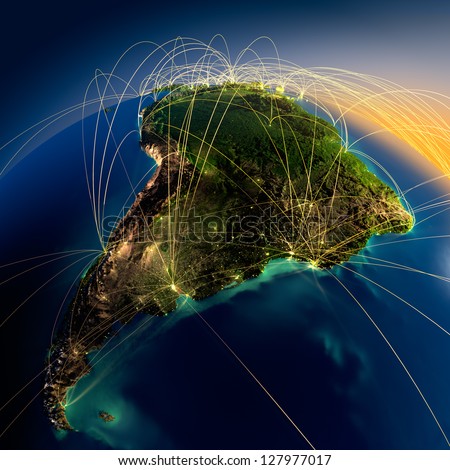
Highly detailed planet Earth, lit by the rising sun. Earth is surrounded by a luminous network, representing the major air routes based on real data. Elements of this image furnished by NASAThis guide has been compiled by the Chilean firm Harris Gomez, with whom I work often, usually advising international investments involving Australia, Chile and Brazil.

They have based it on several reports drafted by me over the last couple years.  The final result is excellent.


segunda-feira, 21 de abril de 2014

Contractual implications of Brazilian imperfect adoption of CISG - Problems with China, inter alia

Two years ago, I wrote two brief posts about the adoption of the United Nations Convention on International Sale of Good (CISG) by Brazil (here and here).

Basically, I mentioned that Brazil needed only issue a presidential decree and CISG would become law.  I said:

 Presidential sanction in Brazil sometimes takes more than 20 years to be achieved. NY Convention on international arbitration took 50 years to be completely approved in Brazil, for instance.  Let's hope  CISG set a record the other way around.


Well, there has been much celebration lately regarding CISG in Brazil. But the hard fact is that the presidential decree is still missing.

I take this absence as a strong symbol of lack of political interest in the matter.

This kind of presidential decree is very simple. It is hard to understand how the Presidential Office would have overlooked such an important convention, when in the last two years dozens of international conventions of far less importance have been ratified.

Nevertheless, the Convention Secretariat lists Brazil as a member (check the list here).

This situation is potentially problematic because it may lead merchants to deduct that CISG is the applicable law for sale agreements with Brazil when, in practical terms, Brazilian courts will probably adopt the Brazilian civil code (or at least Brazilian conflict of law rules).

The situation is even more problematic when  it comes to Brazilian (arguably) major trade partner: China.

In my research about contracts within BRIC countries, (which I recommend you to read) I mentioned that:


3.1.1 Application of the CISG in China


China ratified the CISG in December, 1986. However, it has adopted a significant reservation to the text: it compromised to apply the CISG only if the other country involved in the transaction has also adopted the convention. (...) 

In consequence, in contracts between Brazil and China and between India and China that are brought upon Chinese courts there is a strong possibility that the applicable law will be deemed to be the Chinese internal legislation, especially the "Law on Contracts of the People's Republic of China of 1999" and the “General Principles of Civil Law of People's Republic of China’’. If this is not the wish of the parties, they must study the conflict of law rules applicable to the case and adopt preventive measures. 


Therefore, contracts between China and Brazil, at this moment, might fall in one of three categories: 

i) CISG is applicable (if courts in both countries rule that CISG is valid in Brazil, in spite of the lack of a presidential decree);

ii) CISG is deemed not applicable in Brazil, and thus CISG will also not be applicable in China, resulting in that conflict of law rules must be applied in order to verify the applicable law;

iii) Brazil rules CISG as part of the Brazilian law and China rules CISG as not part of the Brazilian law and, because of that, CISG would not be applicable according to Chinese law. Therefore, a serious and irreconcilable conflict of laws would be put in place.


I consider the situation as being too uncertain. Major trade partners could use a little more certainty in their contractual relationships. 

The same problem goes for any country that, like China, has adopted the safeguard of  Subparagraph (1)(b) of Article 1 of the CISG. 

Brazil, always making simple things complicated.


ADDITIONAL READING: 


Brazil's low productivity - Comments on The Economist's article


The Economist has published an interesting article about Brazil's low productivity. Specifically, on how it has been kept low for the last 50 years.


The 50-year snooze

I could endorse it almost word for word. I would like to copy it here and highlight the best parts in bold, but I see that this would be pointless.

Instead, I shall make some remarks on the dozens of comments left by Brazilians and foreigner alike.


i) Brazilian reader's English language skills are sub par

   Many of the Brazilians  made grammar mistakes and had difficulties getting their point across.

*My English skill are also not perfect.

ii) Brazilian reader's  general written communication skills and argumentation are subpar

  Several comments relied heavily on crystallised expressions and commonplaces, for example: "complexo de vira-lata" (stray dog complex); Brazilian cursed colonial heritage; British/American arrogance; Brazilian good people exploited by the evil American empire, etc.

Several comments criticised The Economist simply for publishing an article "against" Brazil, and many other comments attacked readers who pointed out the need for modernisation in Brazilian labour laws, as if they were suggesting that Brazilian workers should be deprived of its rights.

Some of the comments are aggressive against the foreigners who live in Brazil and that agreed with the article's critics.

iii) Brazilian reader's have trouble with the use of data and objective argumentation

 Brazilians commenting the article seldom make use of data points, statistics, etc.

5 of the commentators who seemed Brazilians used wrong data. On the other hand, 2 of the commentator who seemed Brazilian used data correctly.

The other seemingly Brazilians used no figures to support their comments.

CONCLUSION

The very comments to the article seem to confirm that Brazilian workers are not as well educated and trained as their peers, at least regarding written communication and argumentation in the English language.

It is fair to assume that there are direct connections between educational level and productivity. Also, I would go as far as to assume that a population with good English language skills is probably better suited to compete with Europe and America in high technology fields. Thus, one could say that the main point of the article (Brazilian inferior productivity) is well supported by the evidence provided by the Brazilian commentators.

I should say that I know that the numbers are not statistically significant, that the sample is biased and that this is not a rigorous survey.

But please keep in mind that, in spite of the lack of statistic value, the comments are an intriguing source of information. Few Brazilians know English well enough to read The Economist (some pools mention a 5% English literacy rate). And even among this select group it was easy to spot mediocre skills.

It is OBVIOUS that Brazilians have a tremendous education and productivity problem.

When investing in Brazil, keep that in mind and try to invest in your team's training.


terça-feira, 15 de abril de 2014

Setting up Electronic Payment Platforms in Brazil


I got another article published at Alternative Emerging Investor. Please find it below. 

You may purchase this article and the full magazine at http://www.aeinvestor.com/ 


PAYMENT PLATFORMS IN BRAZIL

Many providers of international payment services have been seeking to enter the Brazilian market.  The companies, both big and small, operate mainly through websites and focus on the intermediation of payments for merchandise. Several of them also offer direct transference services, especially between individuals.
The Brazilian market is very particular, however, due to its high level of automation and to its very strict regulation.

Brazil has implemented quasi real time retail, interbank and forex payments infrastructures in the form of automated clearing houses, overseen by the Brazilian Central  Bank.

The direct participation in such clearing houses is heavily regulated and demands investments in risk mitigation and technical infrastructure. Brazilian Central Bank will also perform a very detailed authorization process before allowing any company to become a financial institution able to take part in the backbone of the Brazilian payment system.

Smaller companies in Brazil have been able to participate in the market by acting as Point of Sale (POS) operators, intermediating the relationship between a highly dispersed customer base and a relatively concentrated base of retail providers.

The scene for international payment providers, however, remains a little opaque.  A number of companies are starting to do business in Brazil, basing their operations in a proprietary base of clients located in one specific country.  For example, one company may specialize in bank transferences made between a Brazilian community in Portugal and another specific Portuguese community in São Paulo.

These payment solution companies (PSC) might be, in effect, creating a separate, private clearing house for their own payments. This would happen, for example, if the PSC waited for similar order to be transmitted from one country to the other (one person in Brazil who wants to send 100 USD to Portugal and one person in Portugal who wants to send the same value to Brazil), and then compensated the orders within the respective countries (by depositing the 100$ sent from Brazil directly to the bank account of the person who wanted to receive money from Portugal, for example).

This kind of informal clearing of deposits would be absolutely illegal, since it would be made outside of the Brazilian payment system administered by the Central Bank.

To further complicate things, though, one must consider that if the PSC acts exclusively as a point of sale terminal, receiving data from credit cards and transmitting them for clearance before officially endorsed financial institutions in Brazil, its activities would be subject to a much less strict regulation. On the other hand, these PSC should be prepared to aid the Brazilian sellers or consumers to obtain proper tax documentation regarding the transaction, since the receipts of payment generated electronically often do not contain all the details required by Brazilian authorities.

Finally, transactions that use virtual coins, such as Bitcoin, inter alia, are out of the scope of regulation of the Brazilian Central Bank and therefore might theoretically be performed by PSC companies, even if they are not registered as or acting on behalf of financial institutions in Brazil.

The conclusion is that the operation of foreign payment solutions web sites in Brazil might be subject to two or three very different sets of rules, depending on details about how the transactions are conducted. The operations must be carefully planned in order to avoid infringement of public policy regulations. Further regulatory development, especially regarding the use of virtual coins, are expected to take place soon.


This article has originally been published at the sixth installment of - Alternative Emerging Investor.

To subscribe or purchase this issue, please visitwww.aeinvestor.com, or contact Ms. Tiffany Swensonat tiffany@aeinvestor.com.


segunda-feira, 14 de abril de 2014

Importing tablets and musical instruments into Brazil

FROM A CONVERSATION WITH A CLIENT (details have been changed)


Hello

My name is Sam Wilson and I am seeking any information on the process and procedures of shipping to Brazil. 

The products that I would be shipping includes: laptops, phones, tablets, and musical instruments.

I have a contact in Goiania that would re-sell the products.

What sort of licensing would be needed to ship these products into brazil?

Thank you.


S.T.Wilson

-----------------------------


Thanks for the contact. 

First of all, you must make sure that you distributor in Goiania is company licensed to import. It must possess the import license, which is commonly referred to in Brazil as RADAR (read about here).

Importing electronics into Brazil is not specially complicated. However, since you are dealing with equipments that will make us of WIFI, 3G, Bluetooth and other forms of electromagnetic communication you will need to have them certified by Anatel, the Brazilian telecommunication agency. (there is a lecture about it in the blog, but it has not been translated to English yet)

Products from famous brands such as Vaio, Dell, Nokia and Apple are probably alredy authorized by Anatel. But they are probably subject to exclusive distribution agreements too. So, don't risk selling them here before obtaining proper authorization by the owners. 

Most musical instruments are not regulated, except from toy one or some lines that are directed towards children. 


Please let me know if I can help. 


Regards 


Adler