Este blog tem me surpreendido. Posts excelentes.
A gente que trabalha na área acaba se acostumando com a terminologia e não percebe como ela pode ser complicada.
Parabenizo à autora por este post, que explica a nomeclatura envolvida na cotação de fretes internacionais;
S.O.S. Importação: ENTENDENDO UMA COTAÇÃO DE FRETE INTERNACIONAL...:
'via Blog this'
quinta-feira, 29 de outubro de 2015


terça-feira, 27 de outubro de 2015
How to Scale Your Startup into the Booming LatAm Markets | Go South! Consulting Inc.
I'm not part of this event, but it seems promising:
How to Scale Your Startup into the Booming LatAm Markets | Go South! Consulting Inc.:
'via Blog this'
How to Scale Your Startup into the Booming LatAm Markets | Go South! Consulting Inc.:
'via Blog this'
quarta-feira, 16 de setembro de 2015
quarta-feira, 19 de agosto de 2015
7 Ways to Reduce Taxes on Import of Products to Brazil - The Brazil Business
This articles is very interesting.Specially the comments about adding mark up inside of Brazil.
It deserves a few small corrections, though. The arbitraty reduction of CIF value is not permitted. Also, the use of state tax benefits is far more complicated than what is stated at the end.
7 Ways to Reduce Taxes on Import of Products to Brazil - The Brazil Business:
'via Blog this'
quinta-feira, 30 de julho de 2015
Never open a branch or representative office in Brazil. Incorporate a new company instead.
The option for incorporating a new company is almost always the best one.
This happens because the oppening of a branch is burdened by several difficulties. The main ones being:
i) branches are subject to previous authorization by the Federal Government, which must be obtained in Brasilia;
ii) the foreign entity that owns the branch must print, in an official newspaper in Brazil, all its financial statements and main board decisions. This is not required when a new company is incorporated;
iii) every year, the local branch must publicize, in an official newspaper in Brazil, its financial statements and L&P reports. This is not required for Brazilian Limited Liability Companies, except when they reach considerable size;
iv) branches are subject to direct overview by the public prosecutor's office;
v) registration procedures are lengthier and more complicated;
vi) according to Brazilian law, acts of the branch may generate direct liability to the controlling company, abroad.
On top of that, there is no tax advantage in operating via a branch instead of using a
new corporate vehicle.
quinta-feira, 23 de julho de 2015
New regulatory framework of the Brazilian Telecom infrastructure
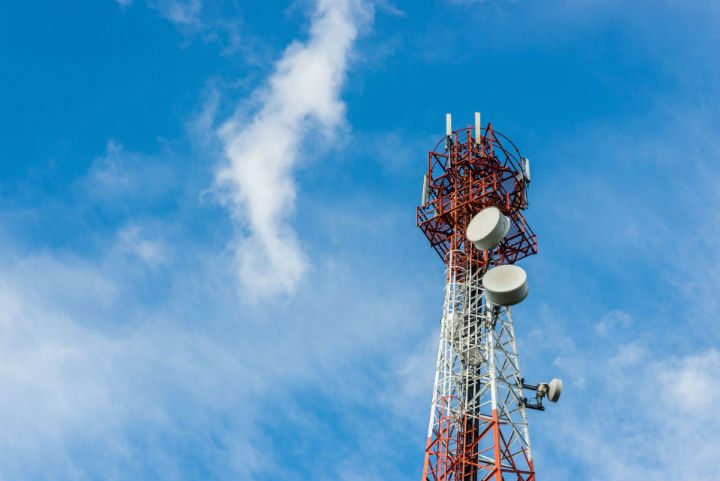 A guest post by Monica Salles, esq. She is my classmate from college and a very succesful and respected lawyer, practicing on administrative and regulatory law.
New regulatory framework of the Telecom infrastructure
Special article by Monica
Salles, esq.
The new law provided a simplified licensing
procedure of supporting infrastructure installation in urban areas.
Tuesday, July 7, 2015
On April 22 it was enacted
the Federal Law 13,116 (General Law of antennas) which stablished general rules
for the procedures of licensing, installation and sharing telecommunications
infrastructure. The new law is the result of a long-standing demand of the
mobile phone and internet market, which suffered from the diversity and
divergence contained in more than 250 local laws on the matter.
Focusing on reducing
bureaucracy, the new law provided a simplified licensing procedure for the
installation of supporting infrastructure in urban areas. The license request
will be sent to a single administrative unit of each organism and if an environmental
licensing is necessary, this should occur in an integrated manner. Procedures
must meet the deadline of 60 days within which the responsible administrative
unit may request clarifications and additional information just once. States
and municipalities have spoken about the failure of this term, considering that
until then the processes demanded about 6 months. Nevertheless they will have
to adapt themselves to the new rules.
In order to encourage
investments in the sector, it was established that the term of the license may
not be less than 10 years and it will be renewable for equal periods. Still, it
was forbidden to charge, by the federal agencies, the right of passage of the
structures in public roads and other public property of common use (even when
they are delegated to private entities). The licensee shall pay only the costs
of installation, maintenance and removal of the structures.
The optimization of the installed
structures was also sought with the new law. Therefore, the sharing of the
capacity in excess becomes mandatory, observed reasonable conditions and
prices. The non-sharing will be possible only in cases of justified technical
reasons. As for the new antennas, these should be designed to allow sharing the
capacity in excess by the largest possible number of providers. In order to
prevent the market reserve in the use of towers, sharing shall occur, moreover,
in a "isonomic, non-discriminatory fair and reasonable prices and
conditions."
The new regulation also
provides about the preservation of the landscape and the urban aspects of
cities. It started to be required, for example, that the structures cause the
least possible impact on the landscape and respect the use of squares and parks
and the movement of pedestrians, cars and cyclists. The expansion of the
stations structures required, moreover, a concern with the health of people who
are exposed to the electromagnetic fields generated. Therefore, it determined
the establishment and the compliance with limits for human exposure to the
fields.
It is interesting to note
that six of the Law devices have been object of veto by the President: the item
III of art. 4, item II of art. 13, the heading and § 2 of art. 21 and articles
22 and 23.
The item III of art. 4 predicted
that the Government should promote the necessary investments and make the
installation process or frequent replacement of the network elements and their
supporting infrastructure. However, it was understood that this forecast could
lead to the understanding that the Government would be responsible for bearing
the investments required for the expansion of the facilities or for the replacement
of the network elements and infrastructure, which would reverse the funding
assumption of private investment on the sector.
Vetoes of caput and §2 of the
art. 21, and of the articles 22 and 23 came from the understanding of the
Ministry of Finance, that such devices would end up restricting excessively the
freedom of the companies which provide the services in the definition of the investment
strategies, what could hamper the implementation of technological innovation
and the competition.
Finally, we refer to the
veto of item II of art. 13, which would stablish the responsibility of the
Federal Government body to grant the authorization for the installation of the
antenna, if the municipality does not fulfill the deadline of 60 days. On one
hand the veto had an important role to maintain the federal pact, considering
the division of powers established in the Constitution, on the other hand,
there remained a gap in the Law about the consequences of the failure to meet
the deadline of 60 days by the municipality. This can be a source of
disagreement about the consequences of disregard of deadlines by the federal entities,
and even jeopardize the purpose of the standard to reduce the bureaucracy on
the procedures.
Translated by Jessica Holl,
from Brazilianlawblog
Original in Portuguese
available at:
quinta-feira, 21 de maio de 2015
Nuova sessione UNCITRAL sul commercio elettronico | Diritto&Internet
A UNCITRAL está discutindo normas internacionais para troca de registros digitais. O Brasil está bastante atrasado neste aspecto. Ainda nem adotou as convenções modelos sobre comunicação eletrônica (uso de email como meio de prova, etc.)
Pensem no seguinte: que meios de prova o direito brasileiro pediria para comprovar trasnsações puramente eletrônicas, produzidas no exterior? Pensem em Bitcoins, ordens de pagamento de corretoras, etc.
New york: nuova sessione UNCITRAL sul commercio elettronico | Diritto&Internet: "English version (4)
"
'via Blog this'
Assinar:
Postagens (Atom)