Mostrando postagens com marcador central bank. Mostrar todas as postagens

segunda-feira, 25 de novembro de 2019

When will Brazil regain the investment grade?

This report from Novus Capital, an investment management firm, shows that, by 2027, Brazil may reach an acceptable debt to GDP ratio for purposes of receiving investment grade, provided that the government does a very good job on the management of the budget. 

In a less than optimistic scenario, the goal of a maximum of 63% of debt to GDP would only be reached by 2040. 

The findings are similar to the reports issued by the Brazilian Central Bank on the matter. 

Although the findings are not stelar, they are positive. The study shows that the country may stabilize and improve its finances without much effort, just by not increasing expenses. 

The cabinet is very much willing to speed up this kind of good news. I would bet that, before long, Brazil will receive at least an update in its rating. 

You can download the full report (in Portuguese) here. 


segunda-feira, 25 de novembro de 2013

Getting money into your Brazilian company - a few common problems


See also: 


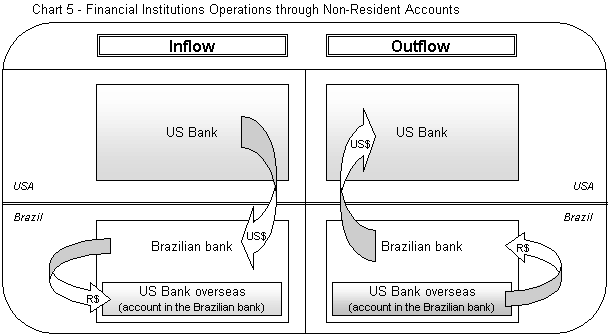
I have spent the last week struggling with Brazilian banks in order to get ahold of some investments/loans that my clients wired from abroad.

I often receive complaints from the readers, saying that "Brazilian banks have retained their money", or that "It is impossible to get money into Brazil".  More than one have asked me what would be the penalty for bringing the money in a bag (or in a car). They always ask about this last one in a theoretical way, but I sometimes sense that it has gotten way over platonic contemplation.

I know my way around the system, for sure. But, even for me, this kind of operation is always stressful. Everybody in the firms gets double coffee on money week.

The path, in theory, is not so difficult. Basically:

terça-feira, 21 de maio de 2013

Electronic payments in Brazil - A telecom business, more than a bank one

Brazil  has just published a provisional measure (which has the force of a  bill) that regulates electronic payments in the country (link to the Portuguese text).

Brazilians already make heavy use of credit and debit cards. So, this is not the news.

What is new is that the new rules put electronic payment providers under the control supervision of the Brazilian Central Bank. Think of pay pal, bitcoin, small credit card companies, etc.

The credit card giants, such as Visa and Master Card, will also be subject to a higher degree of supervision. It is like they were integrated to the Brazilian bank system.

This has some benefits, such as a higher level of security, as well as disadvantages, such as more bureaucracy and elevation of costs.

The rules are very broad, and will depend heavily of further regulations to be issued by Brazilian Central Bank.

A central point, that many people might have overseen, is that electronic payment by cell phone have been clearly described as a joint responsibility of the Brazilian Central Bank and the Brazilian Telecom Agency (Anatel).

So, I will probably be posting about a joint rule to be issued by Anatel and the Central Bank very soon.

A curious fact: I have been receiving calls from providers of electronic payments software since last year. Probably, the telecom operators already knew about the new rules and started asking for proposals abroad.

They were well informed! The rules are finally here.

If you also want to sell your payment software in Brazil, I'd recommend you to read about taxation of software in Brazil.

What do you think about it?


segunda-feira, 20 de maio de 2013

How to send profits from Brazil to Europe


See also: 


This post cover the remittance of profits that have been obtained by a Brazilian company with foreign shareholders.

Foreign investments in Brazil are subject to registration with the Central Bank of Brazil (BACEN), and the information the investor provides becomes part of the Information System of the Central Bank (SISBACEN). This registry is a key requirement, without which the investor cannot remit the profits obtained in his operations in Brazil abroad, repatriate the capital or reinvest the profits.

After Law n. 9.249/2005, the profits earned and distributed from 01/01/1996 became exempt from income tax as well as from the supplementary income tax in Brazil. 

Therefore,  remittance of dividends abroad is exempt from income tax.

Dividends repatriation is allowed, at any time and without any kind of government authorization, as long as the balance sheet of the company is duly registered and the amount remitted is equivalent to the amount declared in the balance.

The financial institution managing the FX agreement may ask for a record of the shareholder`s meeting that decided upon the distribution of profits. This is due to compliance rules. Depending of the compliance analyst, it may accept a simple signed form, or it may request the records to the filed with the Commercial Registry. In this last case, the transaction may be delayed for one or two weeks.


segunda-feira, 11 de fevereiro de 2013

Power of Attorney for setting up a company in Brazil

SEE ALSO:

NEW RULES FOR POWER OF ATTORNEY - 2017

Incorporating a Brazilian company, step by step
How to incorporate a Brazilian company through foreign direct investment
List of documents for setting up a company in Brazil


--------------
Dear Mr. Adler 

I have read your blog "List of documents for setting up a company in Brazil" dated 19 November 2012 on the website http://brazilianlawblog.blogspot.nl/2012/11/list-of-documents-for-setting-up.html#uds-search-results.
 
For an assignment at my university in the Netherlands (setting up a LDTA and I have chosen Brazil as country of corporation) I would much appreciate if you could forward me the "power of attorney to a Brazilian representative" referred to in your blog for information, and if possible, please advise which "powers" are mandatory according to Brasilian law.
 
To my understanding two power of attorney's (PoA's) need to be granted to a legal representative resident in Brazil:

·    one for corporate purposes; and
·    one for tax identification number purposes (CNPJ/MF). 

Is this correct?

If so, could you please provide both PoA's?

Looking forward to hearing from you.

Kind Regards,

Lieke
--------------------------


Hello Lieke, 

Thank you for your contact. 

I don't usually provide models.

Regardin the PoAs, there are two contractual relationships that need attention. The first is the more general one, where the grantor gives the agent powers to incorporate a company. 

Since incorporation of a company involves several agencies in Brazil, this PoA will usually be explicit about powers to represent the grantor before many agencies, including the Brazilian Revenue Service (Receita Federal), where the CNPJ is granted. 

The second Power of Attorney (which is usually granted within the same document) may or may not be given to the same person that receives the first one.

It is mandatory, for the law states that any foreign investor in Brazil must have, permanently, a local representative with powers to receive court summoning. This is mainly to avoid delays in summoning should the foreign investor be actioned in any lawsuit here in Brazil. 


Please draft a template and I will review it for you. 


Good luck in your studies. 

Adler

_____________

Hello Adler,

Thank you for your responding to my email!

Your help is much appreciated, thank you for clarifying.

I hope you don't mind me asking you some more questions.

While searching the internet I came across another PoA - please refer to the following: http://www.sec.gov/Archives/edgar/data/1439746/000114420411056375/v236335_ex10-10.htm.

This other PoA seems to be more broadly written, e.g. to attend and vote for, in the name of Grantor, in all and any meetings + appoint officers + etc.

The differences between it and your mail are a bit confusing. 

Should I indeed assume many sorts of PoA templates are used in Brazil?

If so, how do I know which one should be used in practice?

More importantly; how many and which absolute powers should a legal representative be given (in accordance with Brazilian law)?

OR - do the differences between the two templates relate to:

a) there being PoA's which only relate to powers to incorporate a company; and
b) there being PoA's which relate to powers to incorporate a company AND to grant powers once the company has been incorporated?

If this is stretching your kindness too far, I will completely understand!


Kind Regards,

Lieke

______________


Dear Lieke, 

Basically, there is no standard template for a Power of Attorney. You will find hundreds of models, covering from very specific acts to virtually all possible powers.

(Actually, it is funny you ask. Only a foreigner would make such a question. In Brazil we are used to not having anything standardized. Not that this is good. In fact, it is very bad for business. But it is a reality.)

I'm forwarding this email to Mr. Nuno, my colleague, who will help you with your other doubts. 

I'd like to ask your permission to post those messages in my blog, since the discussion is getting interesting. 


Regards, 

Adler

________________

Dear Adler,

Thank you for your response and for forwarding my message to Mr. Nuno.

I would certainly not mind if you post the messages in your blog.

Best Regards,